
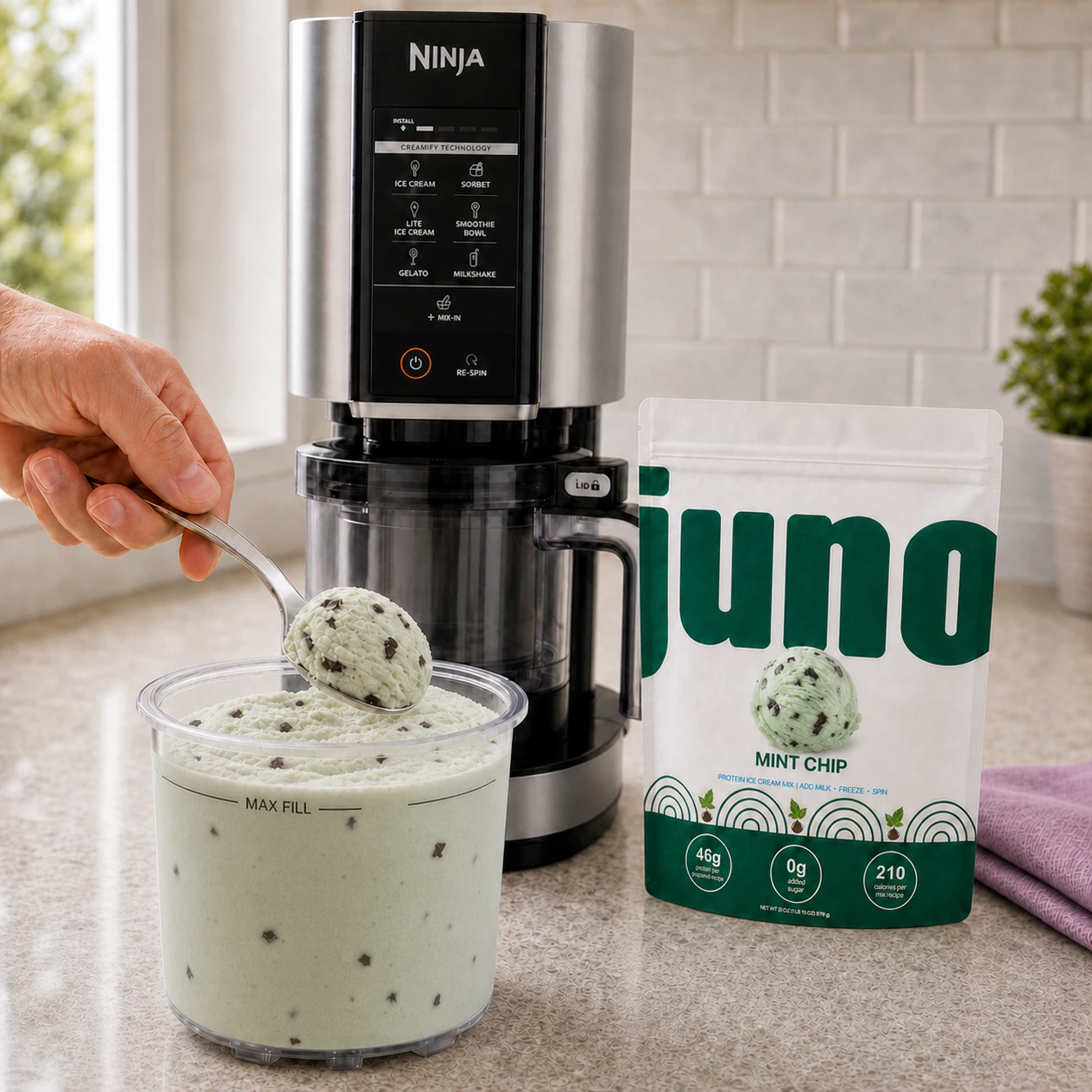
For a pint that stayed cold while you served it, smooth the leftovers into a level surface, replace the lid, return it to a 0°F (-18°C) freezer promptly, and let it freeze solid before processing again. This is a quality workflow for promptly stored leftovers—not permission to save melted ice cream or food made unsafe by time or temperature.
The practical leftover workflow
- Decide quickly. Serve what you want and return the rest to the freezer instead of leaving the pint on the counter.
- Use a clean utensil. Avoid introducing crumbs or saliva from a used spoon into the stored portion.
- Level the surface. Press the remainder into an even layer without exceeding the container's limits.
- Seal and label. Replace the lid and note the date.
- Freeze solid. Store at 0°F (-18°C) and wait until the remainder is fully firm.
- Follow your model's leftover instructions. Container geometry and programs vary, especially when the pint is only partly full.
Food safety and texture are different questions
A pint can be safe yet texturally disappointing, or unsafe even if it looks normal. The FDA recommends refrigerating or freezing perishable food within two hours and keeping a freezer at 0°F. FoodSafety.gov's power-outage chart is more conservative for ice cream and frozen yogurt: it says to discard them after thawing, even when other frozen foods with ice crystals may be refrozen.
Discard a pint that melted, sat out too long, was involved in a power outage, or has an uncertain temperature history. Never taste food to decide whether it is safe.
Why leftover texture changes
Processing disrupts the original frozen structure. Serving warms part of the pint, and refreezing forms a new structure. The result may be harder or icier than the first serving even when it was stored safely. A repeat processing cycle may restore a smoother eating texture, but it cannot reverse unsafe storage.
What if only half the pint remains?
Do not assume instructions for a full pint apply to a shallow remainder. Some CREAMi models offer top, full, or bottom processing zones; others do not. Consult the owner's guide for your exact container and machine before processing a partial pint.
How to reduce leftovers
- Prepare a serving size you realistically plan to eat.
- Portion a processed pint into cold bowls and return the unused portion immediately.
- Add crunchy mix-ins to individual bowls when possible; they may soften during refreezing.
- Record whether your formula remains pleasant after refreezing before making a large batch.
Quick answers
Can I just scoop a refrozen pint?
You can try after a short tempering period if the food has remained safely frozen, but high-protein bases often refreeze firmly. Follow the machine instructions if you choose to process it again.
Should I add milk before refreezing?
Not by default. Adding unmeasured liquid changes the formula and can worsen iciness. Address texture during the next approved processing step.
How many times can I repeat the cycle?
Juno has not established a universal quality limit, and repeated warming and refreezing is not a good storage routine. Make smaller portions when repeated leftovers are predictable.
Sources and scope
Temperature and two-hour storage guidance comes from the FDA's food-storage guidance. Power-outage advice comes from FoodSafety.gov's frozen-food chart, which specifically says to discard ice cream and frozen yogurt after thawing. For processing, use the owner's guide for your exact CREAMi model.