
A protein ice cream mix and a standard protein powder can share whey, flavoring, and sweetener, but they are designed for different jobs. A complete mix aims to provide the whole dry side of a frozen-dessert formula. A protein powder primarily aims to deliver a flavored protein serving, so the user may need to supply the rest of the texture system.
Side-by-side comparison
| Question | Protein ice cream mix | Ordinary protein powder |
|---|---|---|
| Primary purpose | A repeatable frozen dessert | A convenient protein supplement |
| Formula | May combine protein, sweetener, milk solids, flavor, salt, and stabilizer | Varies widely; may not balance a frozen base |
| Setup | Usually measured mix plus a specified liquid | Often needs additional ingredients and experimentation |
| Flexibility | More constrained but more repeatable | More open-ended but less predictable |
| Best for | People who value speed and consistency | People who enjoy formulation or already own a powder they like |
What a complete mix is trying to solve
Frozen desserts need more than a target number of protein grams. The base must taste sweet enough when cold, carry flavor, manage water, and process into a texture people want to eat. A mix can portion those functions together so the user does not have to source and measure each component separately.
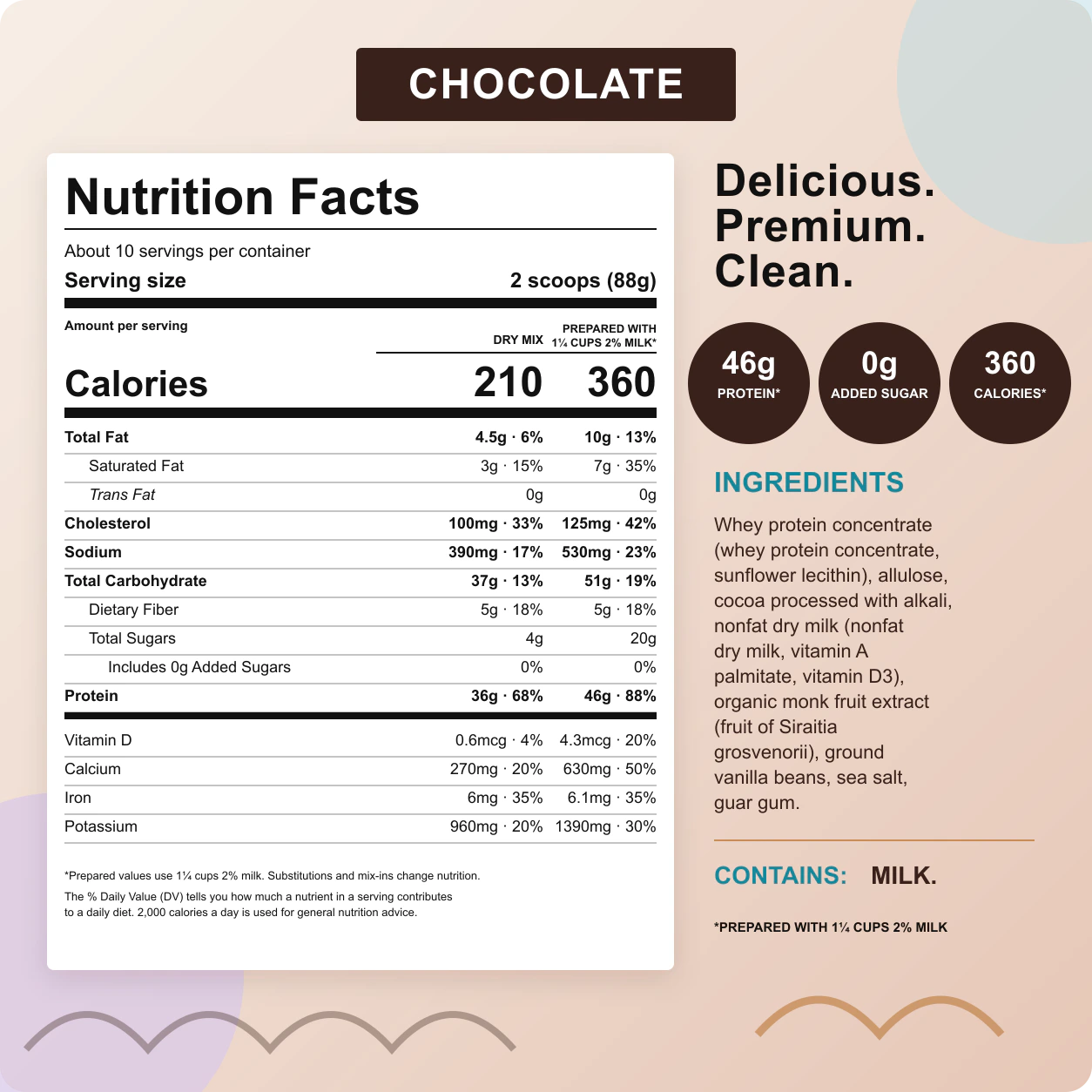
Juno Chocolate, for example, combines whey protein concentrate, nonfat dry milk, allulose, cocoa, monk fruit extract, salt, and guar gum. Its verified direction is 88g mix plus 1¼ cups 2% milk. That convenience is the point: the serving is formulated as a system.
When ordinary protein powder makes sense
- You already have a powder whose flavor and digestion you like.
- You want full control over sweetener, milk, fruit, fat, and stabilizer.
- You enjoy testing and are willing to weigh ingredients.
- Your dietary needs make a prebuilt mix unsuitable.
A protein powder is not “wrong” for the CREAMi. It simply does not promise that one scoop plus an arbitrary liquid is a finished ice cream formula.
When a purpose-built mix makes sense
- You want fewer ingredients to buy and store.
- You prefer a known preparation over repeated trial and error.
- You want the published prepared nutrition to match your pint.
- You value consistent flavor and texture between batches.
How to compare cost honestly
Do not compare only the sticker price per ounce. Compare the cost of one prepared pint, including milk, sweeteners, cocoa or fruit, stabilizers, and mix-ins. Also compare serving size and protein per prepared serving. A cheaper powder can remain the lower-cost route, especially if you already own the supporting ingredients; a mix may save shopping and testing time.
How to read the labels
- Check serving weight in grams. Scoop counts are not comparable across products.
- Separate dry and prepared nutrition. Milk and toppings change calories, protein, fat, carbohydrate, and allergens.
- Read the complete ingredient list. Protein source alone does not describe the texture system.
- Check allergens and suitability. Juno contains milk-derived ingredients and is not dairy-free.
- Look for verified versus estimated values. Juno currently labels Chocolate as verified and the other six flavor panels as estimates pending final production formulas.
Choose a mix when you want a repeatable shortcut. Choose ordinary protein powder when customization matters more than convenience. Neither category guarantees quality; the formula and instructions do.
Sources and scope
Juno product statements in this comparison come from the current verified Chocolate formula and label. General protein-powder products differ too much to treat as one formula, so evaluate the label of the exact product you plan to use. For a controlled way to test one, use our protein ice cream ratio framework.