
If a Ninja CREAMi pint looks powdery after the first processing cycle, do not rebuild the recipe immediately. Smooth the surface, run Re-Spin once, and inspect it again. If it is still dry, verify the recipe ratio before adding a very small amount of liquid.
The fastest troubleshooting order
- Confirm the cycle finished normally. Stop if the machine behaved unexpectedly or the pint, lid, paddle, or outer bowl is not correctly installed.
- Run Re-Spin once. SharkNinja specifically describes this function as a way to make a processed treat softer and creamier.
- Look beneath the top layer. A dry-looking surface can sit over a creamy center. Stir a narrow channel with a spoon before deciding the whole pint failed.
- Check your measurements. Too much powder or too little liquid needs a formula correction, not repeated cycles.
- If the ratio was correct, add only 1 tablespoon of milk. Put it in a small well near the center and Re-Spin again. Add more only in 1-tablespoon increments.
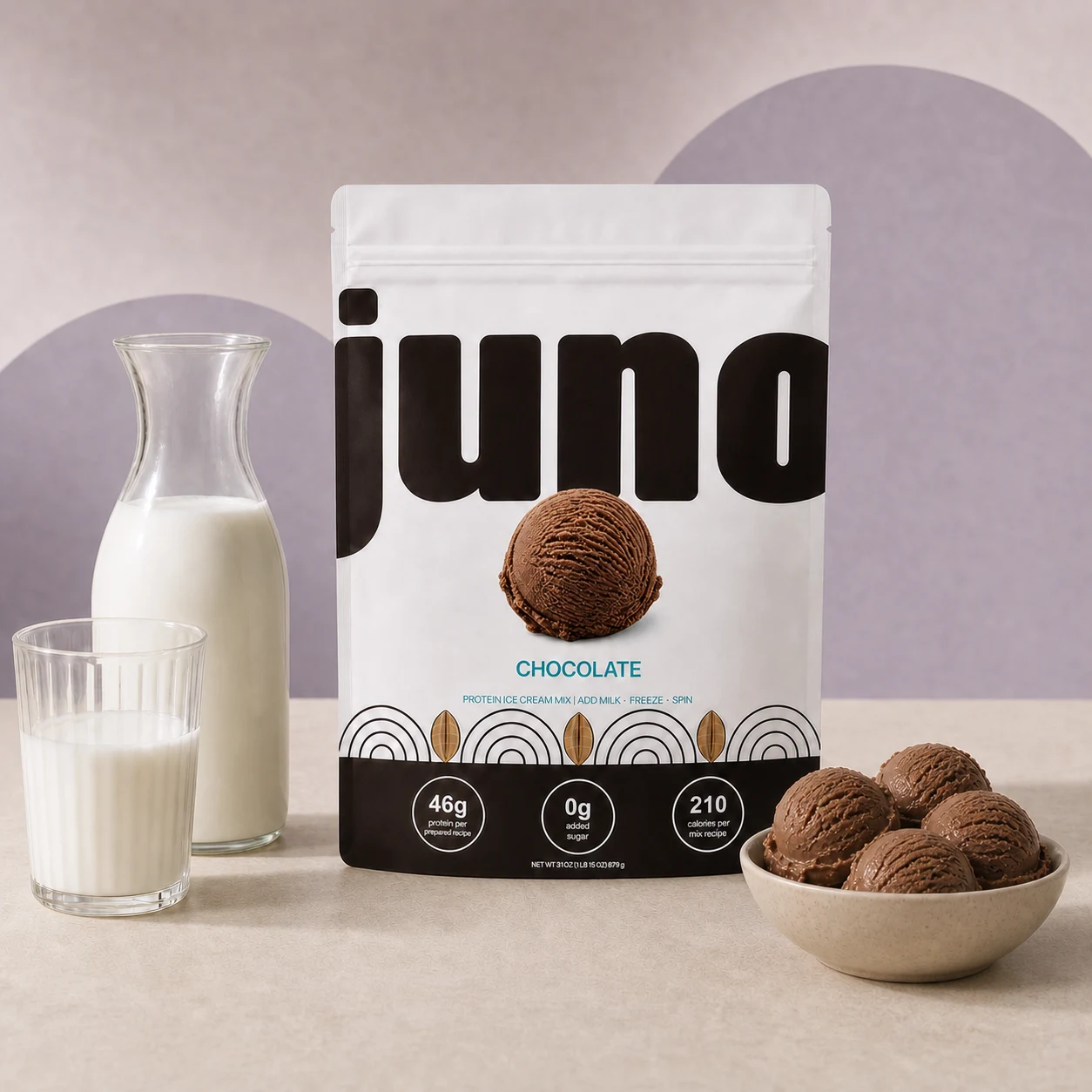
The verified ratio is 2 scoops (88g) mix to 1¼ cups 2% milk. If you used that ratio, try Re-Spin before adding anything.
Why a CREAMi pint turns powdery
The pint is very cold
A fully frozen, lean base can break into fine particles on its first pass. This is precisely the situation where another processing pass can bring the particles together.
There is too much dry material
Extra protein powder, cocoa, pudding mix, fiber, or powdered sweetener all absorb water or change the solids balance. “One more scoop” is a formula change.
The base is low in fat and sugar
Fat and sugar contribute to the softer structure of conventional ice cream. A high-protein pint with less of both may need more precise measuring and a Re-Spin.
The powder never dissolved
Dry pockets do not hydrate while frozen. Whisking thoroughly before freezing is easier than fixing concentrated clumps afterward.
The wrong program was selected
SharkNinja advises choosing a program based on the ingredients, not the texture you hope to get. Compare your base with your model's recipe guide and follow the Juno pouch when using Juno.
What not to do
- Do not pour in a large, unmeasured splash of milk.
- Do not add more powder to a pint that is already dry.
- Do not repeatedly process a pint if the machine sounds abnormal.
- Do not process a pint with a sharply angled or irregular frozen surface; follow your machine's safety guidance.
- Do not assume a successful recipe for one protein powder will transfer scoop-for-scoop to another.
How to prevent the problem next time
- Use a scale for dry mix whenever a gram weight is available.
- Measure liquid at eye level.
- Blend or whisk until no dry material remains.
- Freeze the pint on a level shelf.
- Keep a note of the milk, exact quantities, freeze time, program, and number of respins.
- Change only one variable on the next batch.
When the problem is icy instead of powdery
Ice crystals and powderiness are related but not identical. A pint with large, crunchy crystals may have thawed and refrozen, contained too much free water, or used a milk that behaves differently from the recipe. Start with the exact recipe and a fresh flat freeze before making multiple adjustments.
Sources and scope
Re-Spin and program-selection guidance is based on the official Ninja CREAMi product guidance. Machine models differ; consult the owner's guide for yours. Juno is not affiliated with or endorsed by SharkNinja.